The Hargila Army is an inspirational grassroots organisation founded and led by our Working for the Wild Ambassador Dr Purnima Devi Barman. We are proud to have supported their work protecting and safeguarding the future of the endangered greater adjutant stork and its threatened habitat in Assam, India, through empowering local women to become conservationists. Following the success of this project, they are now hoping to expand their work to the stork’s other stronghold in Cambodia.
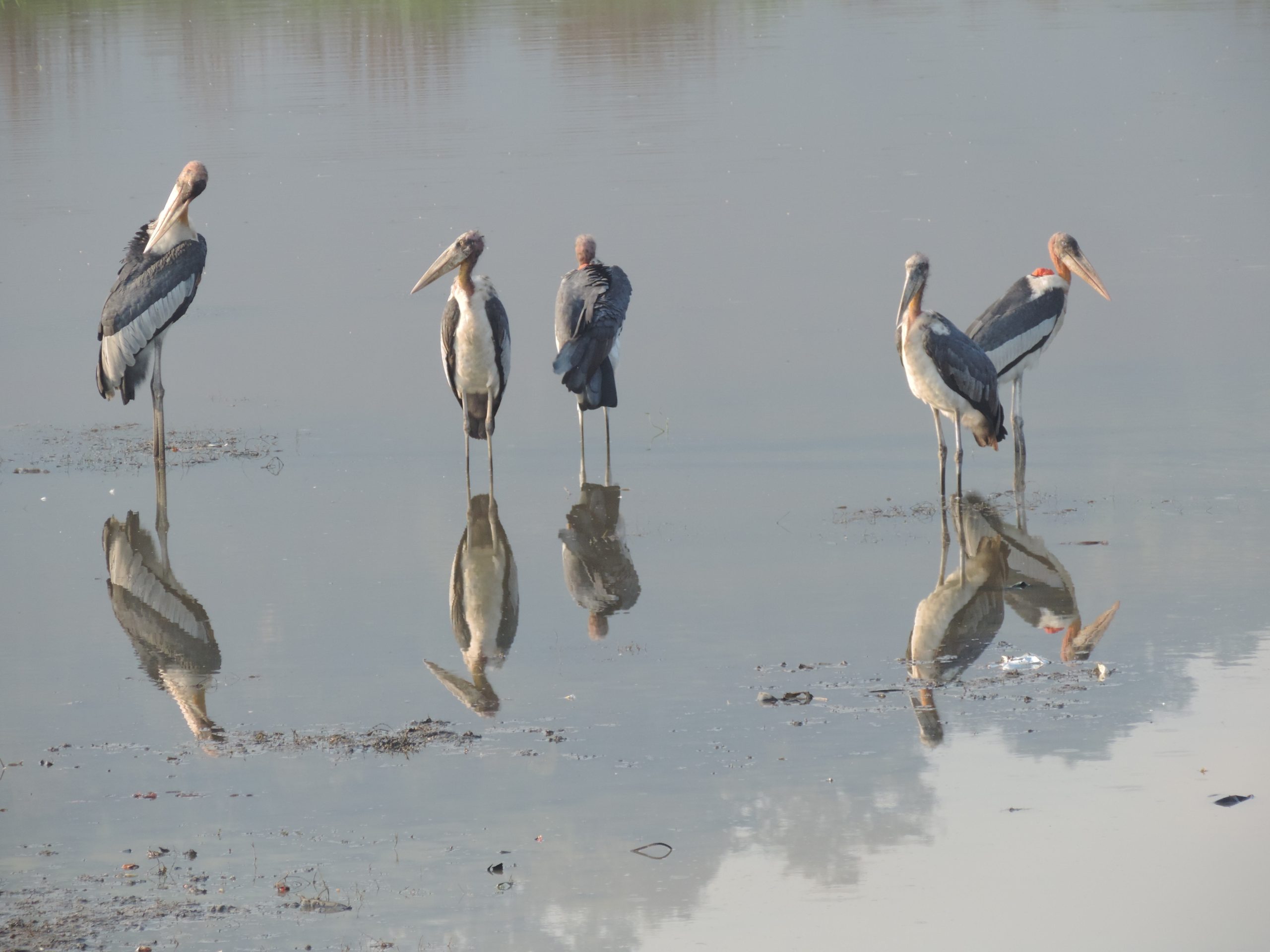
The greater adjutant stork, or Hargila, is the world’s rarest stork, breeding only in Cambodia and Assam. This remarkable bird is a vital part of its wetland ecosystem. It is also a very effective scavenger, important for reducing the spread of diseases for both wildlife and people. Due to habitat loss, the storks have come into closer contact with human habitation and moved onto feeding on rubbish dumps. They are often seen as dirty and a pest, leading to misunderstanding and persecution.
Purnima’s conservation and community empowerment model set up in India has been extremely successful, increasing stork populations and empowering thousands of women to become conservationists and to build their livelihoods around protecting them. We would now like to help replicate this model in Cambodia, training women in nest site and habitat protection, conservation leadership and providing equipment necessary for the protection of the storks’ nesting sites in Cambodia. It is hoped that women from India will be able to travel to Cambodia to share their knowledge and experiences to help develop new businesses and livelihoods based around the storks and their importance to the local area.
Through this community initiative, the greater adjutant stork and its threatened wetland habitat will be better protected, leading to population increase and a more secure future for this endangered keystone species. It will also increase awareness of the importance of these animals among local communities and enable hundreds of women to play a key role in stork conservation, whilst also building sustainable businesses and boosting the local economy.