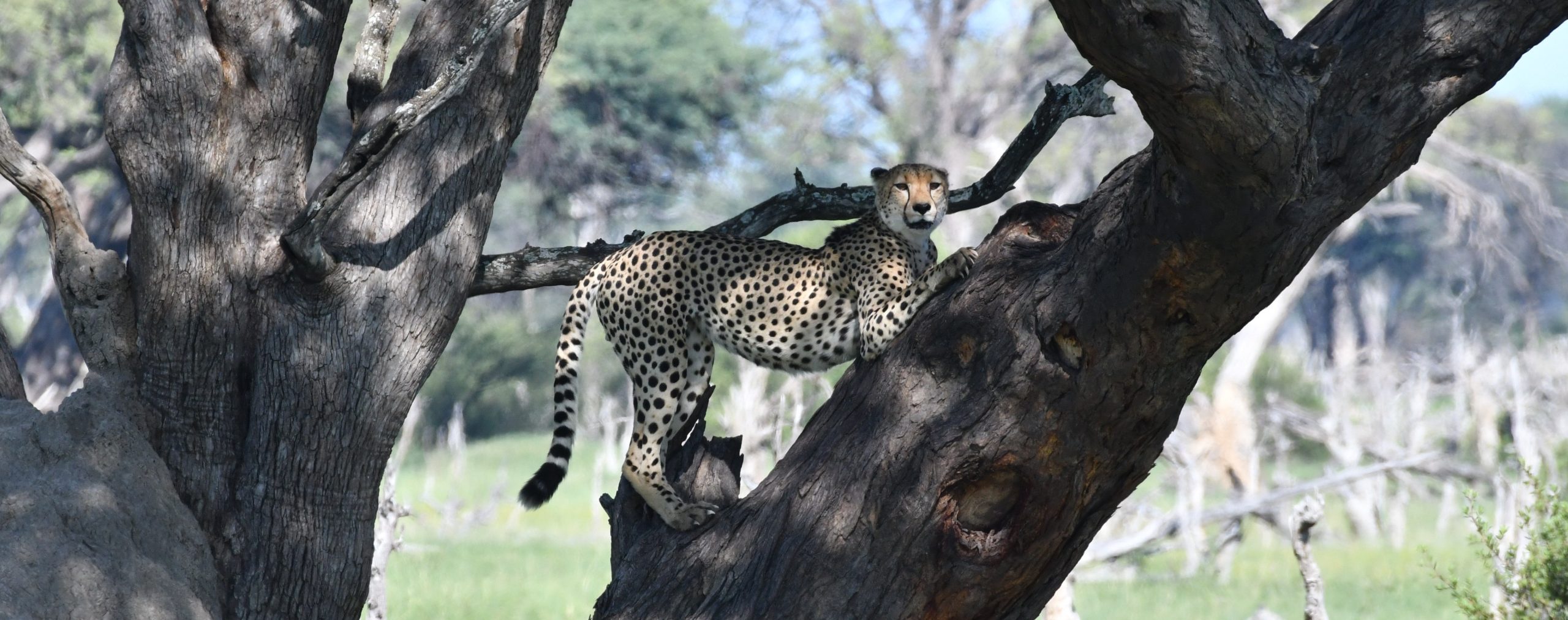
Large carnivores, in particular big cats, are the apex predators in many ecosystems in Africa. Understanding their population dynamics and behaviour is key both to the conservation of the cats and their habitats, as well as reducing human-wildlife conflict, the negative interactions that occur between big cats and people or livestock.
Our on the ground partner established the Kwando Carnivore Project to research the populations of cheetahs and other big cats in Namibia, to gather population data and understand behaviours and how they are using certain areas, in order to better inform conservation efforts. Because cheetahs in particular are highly mobile, cover large territories, and are found at relatively low population densities, monitoring them can be difficult.
Thanks to Working for the Wild’s generous supporters we have been able to fund the purchase of 10 camera traps. These will be used by the rangers to collect valuable data on the cheetah population in the East Kavango, Otjozondjupa and Zambezi Regions, helping to build a picture of how they and other carnivores use the area, which in turn will inform conservation plans. This technology will enable the rangers to monitor a range of key areas much more closely, more easily identify individual animals, and ultimately better understand the species’ ecology and how to protect them.
Moreover, because the traps will be deployed at some key wildlife hotspots such as water holes, the data they collect will provide a wider picture of the ecosystem as a whole, giving insight into predator prey interactions and identifying species and individuals using the area.