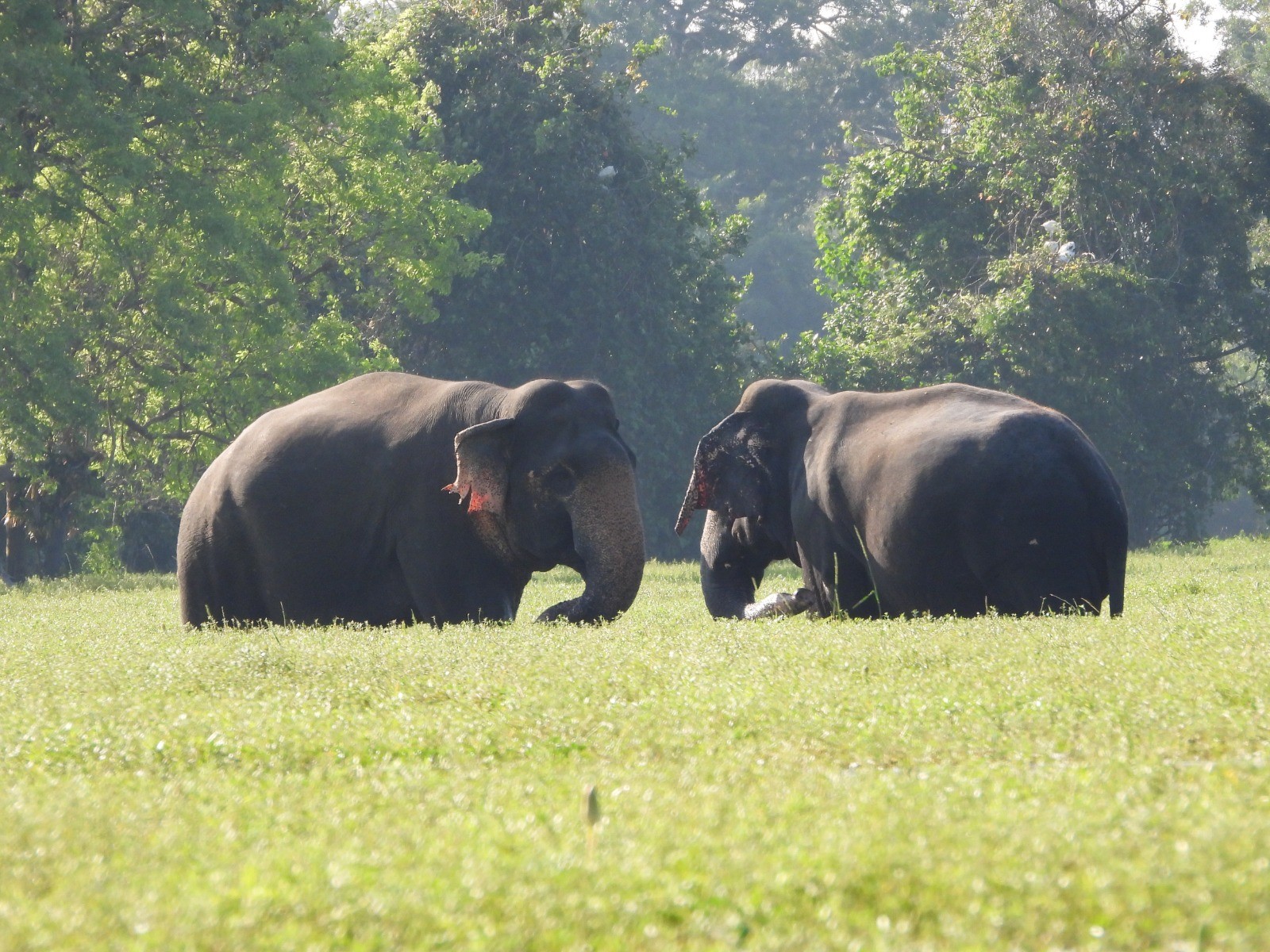
Sri Lanka is a stronghold for the endangered Asian elephant, however, human interaction with elephants is a major issue both for the safety of people in affected villages and the elephants that stray too close to farmland and homes. With the highest number of elephant deaths and second highest rate of human deaths in the world due to this human elephant conflict, managing this relationship between people and wildlife is a core part of the role of wildlife rangers.
Lahugala National Park in the south east of Sri Lanka is one of the smaller national parks in the country, and thus often not as well funded as the larger parks. The small ranger team regularly deals with human elephant conflict, as well as other issues such as illegal fishing in park reservoirs, unauthorised entry of cattle into the park, and illegal hunting of wild animals. However, the team was lacking the patrol equipment and PPE to work safely and effectively in sometimes extreme and dangerous conditions.
Working with our on-the-ground partners Elemotion Foundation, we were pleased to be able to fund £3000 of equipment for the rangers at Lahugala National Park, including protective clothing, bushcraft equipment, night vision binoculars and camping gear. As a result, the ranger team has been able to increase not only the number of patrols but also the effectiveness of these patrols. In addition, the night vision binoculars have enabled them to expand their work further afield to include night time monitoring of beaches that are home to nesting turtles.
Most importantly, the provision of this new equipment has meant better safety and morale for the rangers and improved conservation for elephants and other wildlife.
We were also delighted to provide £4000 towards the construction of a new aviary at the Randenigala Health Management Unit, which is a vital facility for research and monitoring, combatting wildlife crime and caring for and rehabilitating injured wildlife.
Previously, the centre had no specialist area for birds, but thanks to your support and donations and the incredible team work of staff on the ground who volunteered extra time and skills, the aviary is complete and almost ready to open.
Species that will benefit from this brand new facility include birds of prey such as the black eagle, white bellied sea eagle and many owl species, as well as birds endemic to Sri Lanka including the Sri Lanka wood pigeon, Sri Lanka grey hornbill, Layard’s parakeet and the national bird, the Sri Lanka junglefowl.